Episode Transcript
[00:00:00] Speaker A: Foreign.
[00:00:14] Speaker B: Welcome back to Hanyu Chinese Podcast. I'm Emily and This is the fifth episode of our HSK1 Masterclass.
So very welcome you all.
On the previous episodes, we finished on how to introduce yourself. If you haven't watched it, please click into our YouTube page, click into our website. You can see all the podcasts that we have done before.
And now we're going to look to something new.
While you're studying Chinese, you must see tons of characters and you don't know how to write it, right?
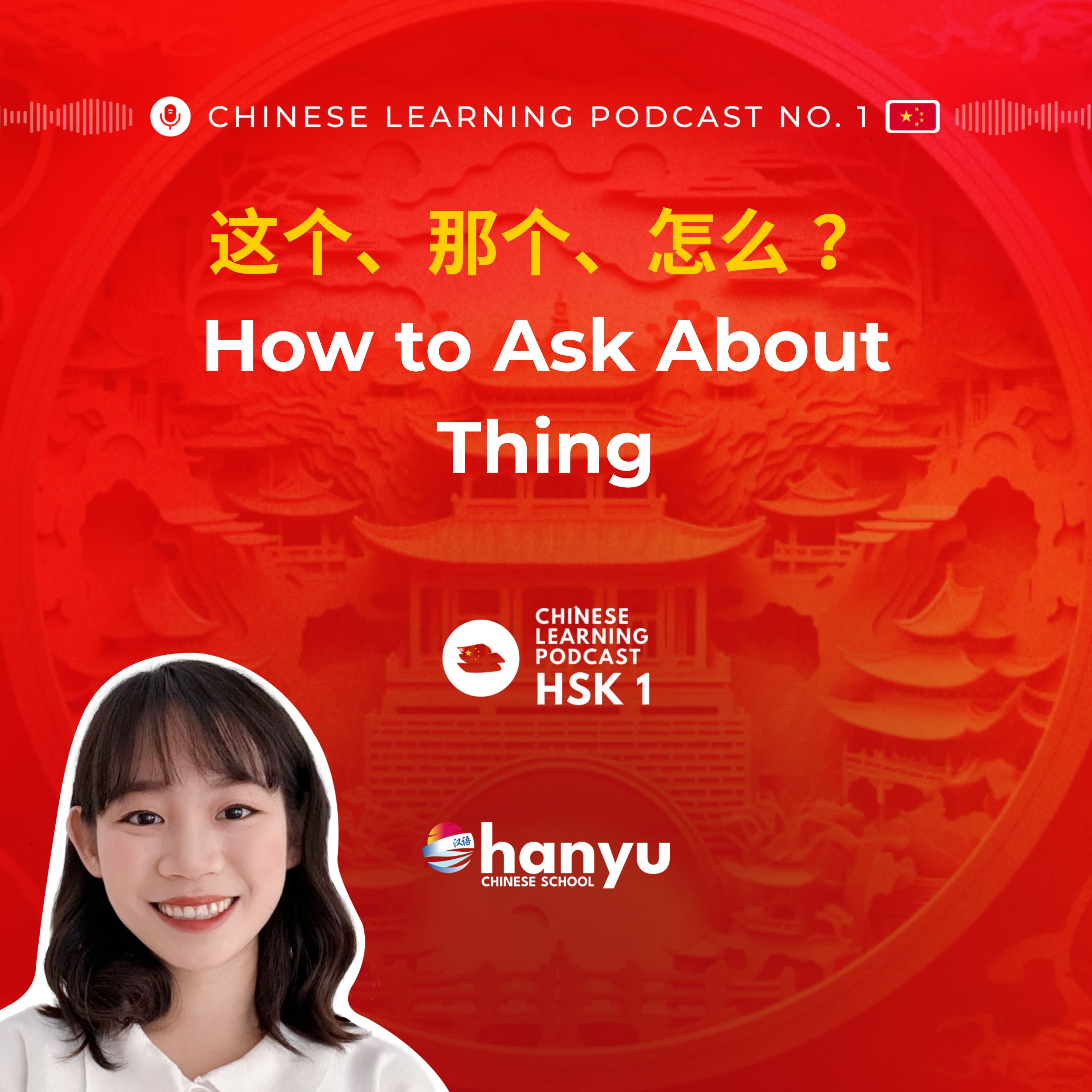
So in this lesson, we're gonna teach you how to ask people how to write a character.
So with this episode, it will be useful when you go probably visit China, probably talking to your Chinese friends, and then you can ask them how to probably write a Chinese character.
So please stay tuned to this episode.
Like always, let's start with watching a video first.
[00:01:43] Speaker A: Welcome. I'm Miao, and today I'm giving the class from Yangshuo.
Today we will learn how to ask how and some demonstrative pronouns such as this and that.
As you may have noticed, Chinese characters are quite complicated.
We must know how to write them.
Many times we will have to ask a native Chinese person how to write a particular character.
How will you say it?
Before asking a question, it is common to say a question please, and then we ask the question means please and means question in Chinese. To name nouns, we usually use demonstrative pronouns such as this and that.
Since there is no distinction between masculine and feminine, demonstratives don't vary this and that.
After these pronouns, we must always use a classifier.
There are many classifiers, but the most frequent and the one that can be used for almost everything is.
So if you want to say this Chinese character, how will you say it?
Excellent.
We can omit the character Han, which, as you might remember, means Chinese people if we simply say it means character.
In order to ask how do you write this character in Chinese, we just need to know how to say how.
In Chinese, the word is.
And this interrogative pronoun is usually placed before the verb and after the name of noun.
With this vocabulary, we are ready to ask the question. A question, please. This character, how and to write.
But if you are asked that question and because you have just started to learn Chinese, you don't know how to write character yet.
How can you say, I'm sorry, I don't know how to write this character?
There's one more expression to know, I'm sorry, which in Chinese is.
So how do we say the whole phrase?
Very good.
It's important to always include the personal pronoun in this case.
Why?
Because as you know, in. In Chinese, verbs don't change in form. Therefore, we must always include the personal pronoun in order to know who is the subject in the sentence.
This has been today's class. I say goodbye. From this beautiful place you must come.
[00:05:40] Speaker B: Okay, very well, Very well. You guys remember the video?
I think it explained it perfectly.
So let's do a little bit of the recap, shall we?
Okay, so the key point of today's episode is how do you write this character, this sentence?
So the answer, the sentence in Chinese is how do you write this character?
But remember, we like to use the word in front of a question.
So make it sound more polite, make it politer, and make it.
Make the people make the listener feel being respect.
So you could say.
Very well then for response, if you don't know how to say, if you don't know how to write this character, you could say, sorry, this character I don't know how to write.
So remember, I cannot.
I don't know.
Did you guys remember the very important word that we learned from the previous episode?
Yeah, also.
So if you want to say like sorry, I. I also cannot write this character.
Where did you put this year?
Very good, very good.
So before, before the verb very good.
And also the other key point that is very important we saw in the video.
So when you say this, we say, when you say that.
But what is this?
It's a measure word that we use for different kinds of objects.
So the structure is.
And then measure word and then a noun.
So here we said this character, we could say they have a different measure word for different kinds of objects. For example, when we want to say about book, we don't use, we use this book.
So from the, from the other, in the further episode, we're gonna look into also different kinds of major words that we will use on daily conversations.
Okay, so in the end, it's your turn.
Please try one of these structures today in a sentence.
So for example, please try to talk to your.
Talk to your Chinese friends, talk to your Chinese teacher. Try to practice this sentence in Chinese with someone who is nearby. And also leave us a comment down below if you have any further question, anything you want to know, want to learn, please give us a comment down here. Very good.
So in the end of this episode, please, if you like this episode, don't forget to like and subscribe our channel. We have podcasts in all kinds of different platform. We have have on Spotify, YouTube, Apple Podcast, Twitch, whatever platform that suits you. And also if you want a one on one Chinese class, please visit our website.
We have courses from just €39.
We have an you can have classes with a native teacher.
We have wonderful teachers from a lot of different places. If you want to learn also other kind of languages, you can also try to connect us. We have courses from not just Chinese, also Japanese, Korean, German, English, anything you need.
So please remember, feel free to come and visit our website.
And if you want to listen to more of our podcast, we have campus.hanyechineschool.com podcast.
So that is for today and thank you guys for coming. We hope to see you in the next episode.
Bye Sa.